
Attached ADU Guide: Is a Home Addition Cheaper Than Building New? (2026)
Building an ADU attached to your main house sounds cheaper because you share a wall. But roof tie-ins and foundation matching can complicate things. Here is the breakdown.
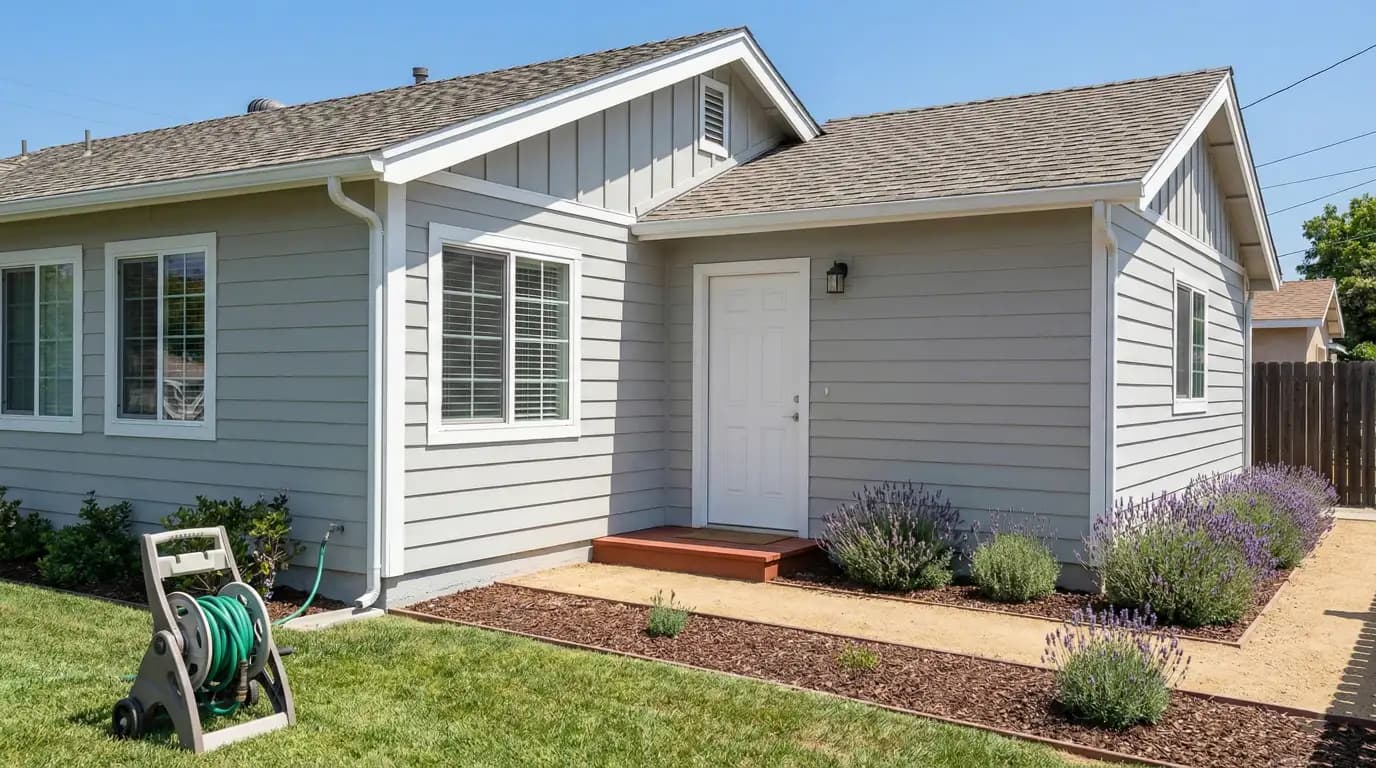
The Attached ADU. It sounds like the pragmatic middle ground between a cheap garage conversion and an expensive detached house.
The logic seems solid: "I already have one wall, so I just need to build three more, right?"
Not exactly. An attached ADU is technically a home addition. You are physically extending your primary residence's footprint. While this often saves money on utility trenching and framing, it introduces a headache that detached units don't have: The Tie-In.
In this guide, we explore the costs, the pros and cons of sharing a wall, and why "soundproofing" should be your new favorite word.
What qualifies as an Attached ADU?
An attached accessory dwelling unit shares at least one wall with the primary residence. It can be:
- A "Bump-out" Addition: Pouring new foundation and extending the house into the backyard.
- A Second Story Addition: Building a new unit on top of your existing single-story home (very expensive).
- Conversion of Internal Space: Turning an existing master suite or "bonus room" into a separate unit with its own entrance (often overlapping with JADU rules).
The Cost: Is it cheaper than Detached?
Attached ADU cost generally lands between $200 and $350 per square foot.
- Total Budget: $150,000 - $300,000.
It is typically cheaper than a detached unit because:
- Utilities: You don't need to dig a 50 foot trench across the yard; you can often tap into the main house's plumbing and electrical nearby.
- Siding/Framing: You are building slightly less exterior wall.
The Hidden Costs: However, making the new addition look like it belongs to the old house is tricky. Matching 20 year old stucco, aligning rooflines, and connecting foundations can eat up the savings. If your contractor messes up the "tie-in" (where the new roof meets the old roof), you will have leaks.
Privacy & The "Shared Wall" Problem
If you are building a mother-in-law suite attached to your house for family, privacy might not be a huge issue. But if you plan to rent to a stranger? Soundproofing is critical.
You don't want to hear their TV, and they don't want to hear your dinner conversation.
- Pro Tip: Do not just use standard drywall. Ask your builder for resilient channel or a double-stud wall assembly between the units. It costs a bit more but saves your sanity.
Attached ADU vs. JADU (Junior ADU)
This confuses everyone.
- Attached ADU: Can be up to 1,200 sq ft (depending on city). Usually requires a separate entrance and fire-rated separation.
- JADU (Junior ADU): Must be contained within the existing walls of the home (usually less than 500 sq ft). Often allows for a shared bathroom or efficiency kitchen.
If you are pouring new concrete to expand the house, it's an Attached ADU, not a JADU.
Design Ideas for Additions
- The "L" Shape: Extend the house to the side to create a private courtyard in the middle. This gives the tenant a private entrance that doesn't feel like they are walking through your living room.
- The Master Suite Conversion: If you have a massive master bedroom you don't use, seal it off, add a kitchenette and an exterior door. Instant ADU.
Is an Attached ADU right for you?
Choose Attached if:
- You have a big backyard but want to preserve the open space (by hugging the new unit to the house).
- You want to save on utility trenching costs.
- You are building for an aging parent who needs to be close.
Choose Detached if:
- You want maximum privacy and rental income.
- You don't want construction dust inside your main house during the build.