
Detached ADU 101: Costs, Requirements & Floor Plans (2026 Guide)
Everything you need to know about building a detached ADU in California. From costs and basements to garage conversions and tiny homes.
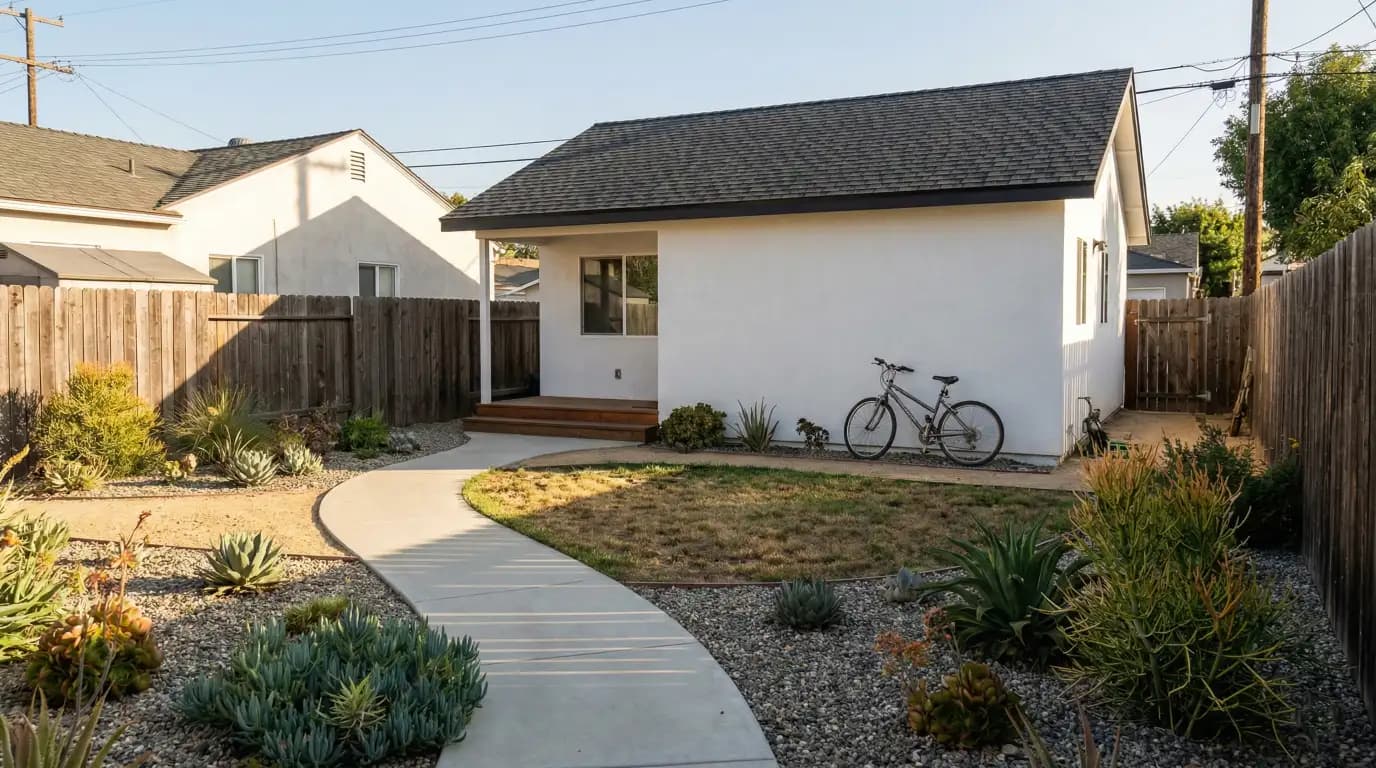
If you have extra space in your backyard, building a detached ADU (Accessory Dwelling Unit) is one of the most effective ways to increase your property value and generate rental income. Often referred to as a "backyard cottage," "casita," or even a permanent "tiny house," these independent structures offer privacy that attached units simply can't match.
In this guide, we break down the costs, requirements, and design options for detached ADUs in California.
What is a Detached ADU?
A detached accessory dwelling unit is a standalone living structure built on the same lot as a primary residence but structurally separate from it. unlike an attached ADU (which shares a wall) or a garage conversion, a detached unit is ground-up construction.
Does an ADU have to be detached? No. ADUs can be attached to the main house or converted from existing space (like a garage). However, detached units are often preferred for rentals because they provide distinct separation between the main homeowner and the tenant.
Detached ADU Cost: What to Expect
One of the most common questions is: How much does a detached ADU cost?
In California, prices typically range from $300 to $500 per square foot.
- Budget / Prefab: $150,000 - $200,000
- Custom Stick-Built: $250,000 - $400,000+
While detached units are generally more expensive than garage conversions (which use existing foundations), they add significantly more resale value to the property.
Detached ADU Requirements in California
State laws (like SB 9 and subsequent updates) have streamlined the process, but there are still specific detached ADU requirements you must meet:
- Setbacks: Most cities allow 4-foot side and rear setbacks.
- Height: typically allowed up to 16 feet (single story) or more depending on local zoning.
- Size: State law generally allows up to 1,200 sq ft, though some cities may limit this based on lot size.
- Parking: In many cases (e.g., near transit), no replacement parking is required if you build on a driveway.
Design Trends: Basements, Garages & Tiny Homes
Detached ADU with Garage
Can you build a detached ADU with a garage? Yes. You can design a structure with a living unit on the second floor and a garage on the ground floor (often called a Carriage House), or a single-story unit with an attached garage. This is ideal for maintaining storage space.
Detached ADU with Basement
Building a detached ADU with a basement is growing in popularity to maximize square footage on small lots. While more expensive due to excavation and foundation costs, it effectively doubles the usable floor area without increasing the footprint.
Is a Tiny House a Detached ADU?
Technically, a "Tiny House on Wheels" (THOW) is distinct from a detached ADU. A detached ADU is built on a permanent foundation and is legally considered real estate. A tiny house on wheels is often classified as personal property (like an RV). However, if you place a tiny home on a permanent foundation and permit it, it becomes a detached ADU.
Detached ADU Floor Plans
When looking at detached ADU plans, efficient use of space is key. Popular configurations include:
- Studio (400 sq ft): Ideal for short-term rentals or single tenants.
- 1 Bedroom (600-750 sq ft): The "sweet spot" for rental income and construction cost.
- 2 Bedroom (800-1,200 sq ft): Perfect for small families or detached ADU homes for sale strategies (condo-ization).
Do ADUs Add Value?
Yes. Market data suggests that a permitted detached ADU can increase property value by up to 30%. Furthermore, detached ADUs for rent command premium prices compared to apartments because they offer private yards and no shared walls.
Disclaimer: This guide is for informational purposes. Regulations vary by city. Check with local planning departments.