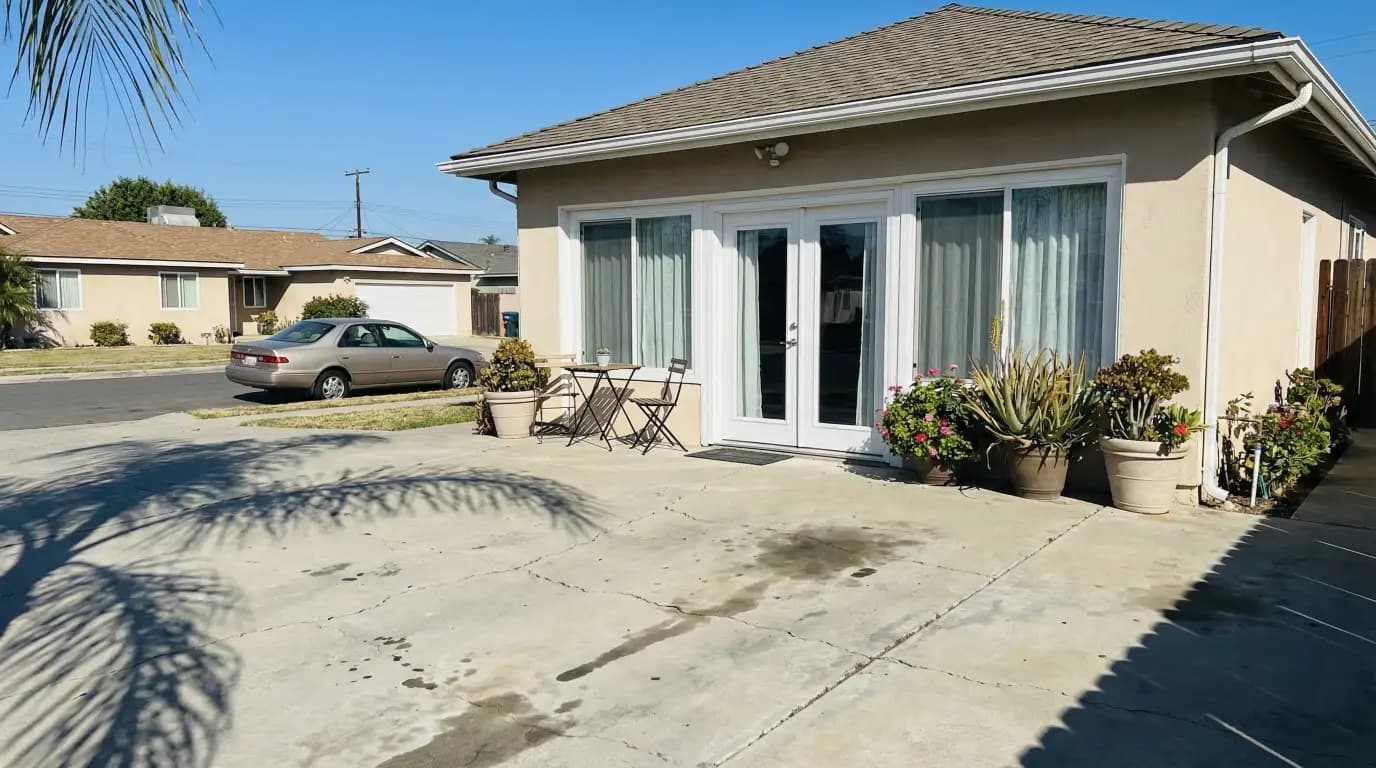
What is a JADU? The 'Junior' ADU Explained (Requirements & Costs)
It's smaller (max 500 sq ft) and cheaper, but comes with a catch: You usually have to live there. Here is the complete guide to Junior Accessory Dwelling Units.
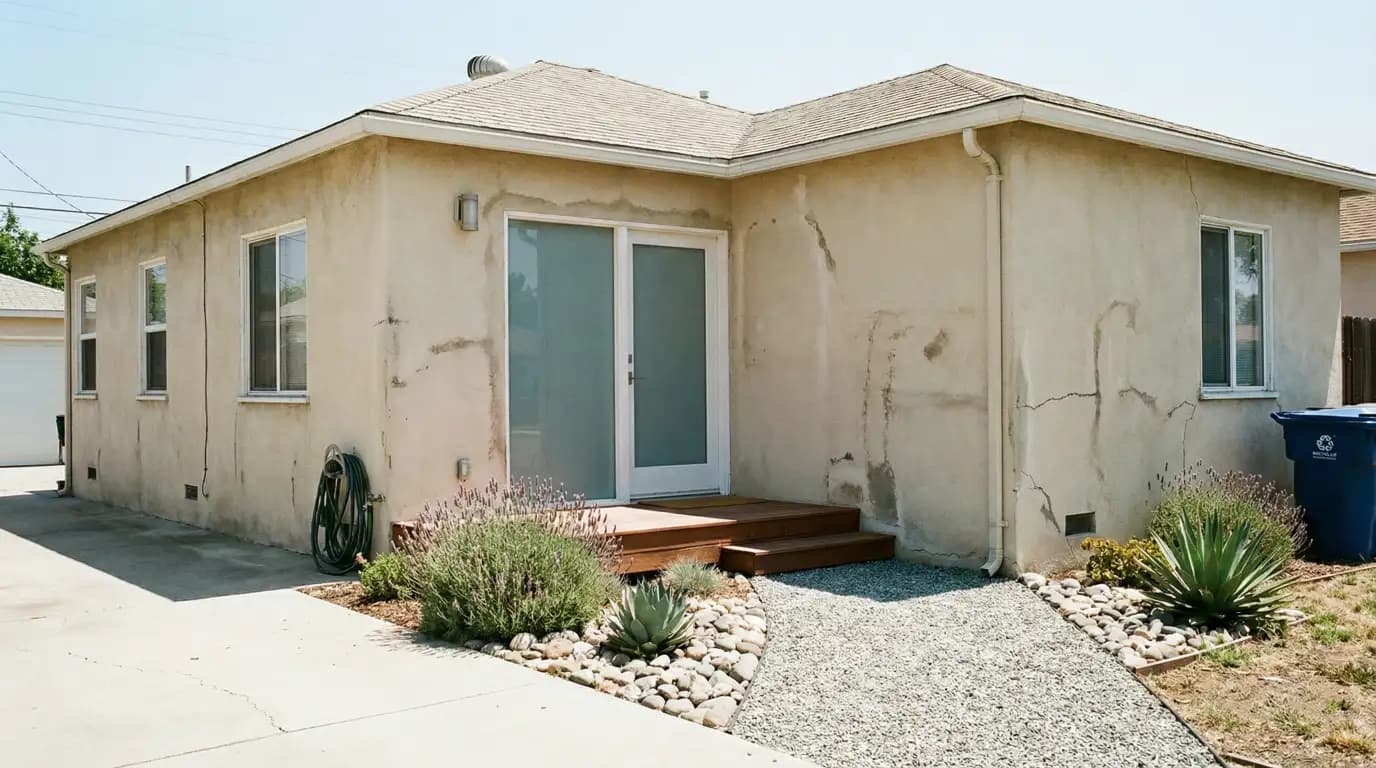
You have an extra bedroom, an attached garage, or a "bonus room" that gathers dust. You want rental income, but you don't have $200,000 to build a detached house in the backyard.
Enter the JADU (Junior Accessory Dwelling Unit).
It is the fastest, cheapest way to create a legal rental unit in California. But unlike its big brother (the standard ADU), the JADU comes with specific strings attached that every homeowner needs to know before pulling permits.
What exactly is a JADU?
A Junior ADU is a specific legal classification for a very small rental unit. To qualify as a JADU, it must meet three main criteria:
- Size Limit: It must be a maximum of 500 square feet.
- Location: It must be created within the existing walls of a single-family home or its attached garage. You cannot build an addition and call it a JADU.
- Access: It needs its own exterior entrance (privacy for the tenant).
The "Efficiency Kitchen" Rule
A JADU doesn't need a full chef's kitchen with a massive range and hood. It requires an "efficiency kitchen," which legally just means:
- A cooking facility with appliances (often just a plug-in induction burner or hot plate).
- A food preparation counter and storage cabinets.
Note: This means you don't necessarily need expensive gas line runs or heavy kitchen renovations.
Bathroom Flexibility
Unlike a standard ADU which requires a private bathroom, a JADU is allowed to share a bathroom with the main house, provided there is an internal door connecting them. However, for maximum rental value, adding a small private bathroom is almost always recommended.
The Big Catch: Owner Occupancy
This is the deal-breaker for many pure investors.
In most California jurisdictions, if you have a JADU, the property owner must live on-site.
You can live in the main house and rent the JADU, or live in the JADU and rent the main house. But you generally cannot rent both units out to two different tenants and move to another city.
Tip: Always check your local city ordinance, as enforcement varies, but state law allows cities to require this deed restriction.
JADU Cost: The Budget Winner
Because you are using existing square footage—the walls, roof, and foundation are already there—costs are dramatically lower than building new.
Typical Cost Range: $50,000 - $90,000.
Where does that money go?
- Fire Separation: Adding fire-rated drywall between the unit and the main house safety.
- Plumbing: Adding a kitchenette sink and potentially a small bathroom.
- Entrance: Cutting a hole in the exterior stucco/siding for a new private door.
ADU ROI Calculator
Calculate the return on investment for your ADU project in real-time
| Year | Rent | Operating Costs | Net Income | Cumulative Return |
|---|---|---|---|---|
| Year 1 | $28,500 | $4,725 | $23,775 | $23,775 |
| Year 2 | $29,355 | $4,768 | $24,587 | $48,362 |
| Year 3 | $30,236 | $4,812 | $25,424 | $73,786 |
| Year 4 | $31,143 | $4,857 | $26,286 | $100,072 |
| Year 5 | $32,077 | $4,904 | $27,173 | $127,245 |
| Year 6 | $33,039 | $4,952 | $28,087 | $155,332 |
| Year 7 | $34,030 | $5,002 | $29,029 | $184,361 |
| Year 8 | $35,051 | $5,053 | $29,999 | $214,360 |
| Year 9 | $36,103 | $5,105 | $30,998 | $245,358 |
| Year 10 | $37,186 | $5,159 | $32,027 | $277,385 |
How to Use the ADU ROI Calculator
Follow this step-by-step guide to accurately calculate your ADU investment return and make informed financial decisions.
Enter Investment Details
Start with your construction cost, ADU size in square feet, and current home value. These are the foundation of your investment calculation.
Set Rental Income Expectations
Enter your expected monthly rent and occupancy rate. Research local rental rates in your area for accurate projections.
Add Operating Costs
Include annual maintenance (typically 1-2% of construction cost), property tax increases, and insurance costs.
Configure Growth Rates
Set expected annual growth rates for rent (typically 2-4%) and home value (typically 3-5%). Adjust based on your local market.
Review Results
Analyze your ROI, payback period, cash flow projections, and cumulative returns. Results update in real-time as you adjust inputs.
Research Local Market Data
Use our city pages to find actual rental rates and home values in your area. Real market data leads to more accurate ROI calculations.
Consider All Costs
Don't forget to include permit fees, utility connections, landscaping, and any site preparation costs in your construction budget.
Be Conservative with Estimates
Use slightly lower occupancy rates (90-95%) and account for potential maintenance issues. Conservative estimates help avoid surprises.
Compare Multiple Scenarios
Try different construction costs, rental rates, and growth assumptions to see how they impact your ROI. This helps you plan for various outcomes.
Return on Investment (ROI) for an Accessory Dwelling Unit measures the profitability of your ADU project by comparing your total investment against your returns over time. A well-planned ADU in California typically generates an annual ROI of 8-15%, making it one of the most attractive real estate investments available to homeowners.
Our calculator factors in multiple revenue streams: rental income from tenants, property value appreciation from the added square footage, and tax benefits from depreciation. It also accounts for operating expenses including maintenance, property taxes, insurance, and vacancy periods.
The payback period shows how long it takes to recover your initial investment through rental income. Most ADU investments in California pay back within 7-12 years, with high-demand areas seeing faster returns. The cumulative ROI demonstrates your total return over the investment horizon, combining both income and appreciation.
Monthly cash flow represents the net income after all expenses, helping you understand the immediate financial impact. Positive cash flow from day one is possible in many California markets, especially in high-rent areas like San Francisco, Los Angeles, and San Diego.
Remember that ADU ROI varies significantly by location, construction quality, and local market conditions. Use this calculator as a starting point, then consult with ADU builders in your area for project-specific estimates and financing options.
Quick Comparison: JADU vs. Standard ADU
It's easy to confuse them. Here is the cheat sheet on how they differ:
The Junior ADU (JADU):
- Max Size: Strict 500 sq ft limit.
- Must be inside existing space? Yes.
- Kitchen: Only needs an "Efficiency Kitchen".
- Bathroom: Can share with main house.
- Owner on-site required? Usually YES.
The Standard Attached ADU:
- Max Size: Usually up to 1,200 sq ft (depending on city).
- Must be inside existing space? No, can be a new addition (bump-out).
- Kitchen: Needs a full kitchen.
- Bathroom: Must be private.
- Owner on-site required? No (under State law).
Is a JADU right for you?
If you are "house hacking" (living in one part and renting the other to help pay the mortgage), a JADU is a no-brainer. It is the lowest barrier to entry for becoming a landlord.
But if you want a pure investment property where you can be completely hands-off? You might want to look at a standard detached unit to avoid the owner-occupancy restriction.